Driving Change Through Research
To me, Chemistry is the science of transformation—turning raw substances into tools, solutions and various possibilities. Whether we are decoding the molecular basis of life or engineering the next generation of clean technology, Chemistry is the subtle and silent force behind that makes some of these possible. Chemistry also underpins the foundation of contemporary medicine, serving as a driving force behind disease detection, treatment and prevention. Its influence spans from the formulation of critical pharmaceuticals to the development of cutting-edge diagnostic tools, reshaping how healthcare is delivered. This article delves into the pivotal role chemistry plays in medical science, showcasing impact innovations and illustrating its profound contribution to saving lives and advancing global health.
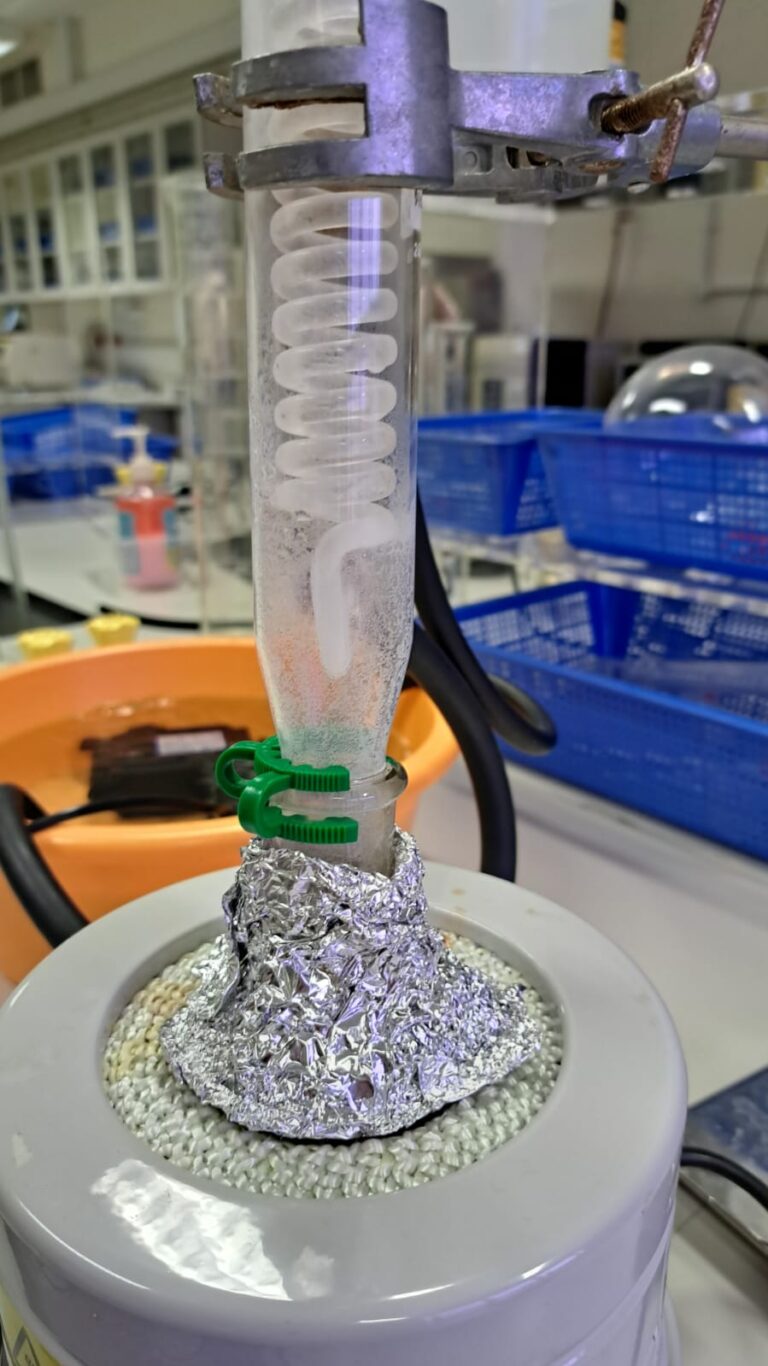
In other areas, Chemistry also plays a foundational role in energy, from designing efficient solar cells and batteries to developing sustainable fuels and carbon capture technologies. In materials science, it enables the creation of everything from biodegradable plastics to superconductors and smart textiles. In agriculture, chemistry helps improve crop yields and pest resistance through fertilizers and agrochemicals, while also driving research into eco-friendly alternatives. Even in environmental protection, chemistry is key to water purification, pollution control, and climate modeling.
Alpha Scholars

The Alpha Scholars Program is a rigorous academic initiative designed to empower high school students through college-level research in the social sciences. Its core aim is to cultivate analytical thinking, scholarly writing, and presentation skills by guiding students through a structured research process focused on the United Nations Sustainable Development Goals. Participants work one-on-one with Harvard student mentors to explore a topic of personal and global relevance, ultimately producing a 12-page research paper and delivering a formal presentation at the Alpha Scholars Convention. The program emphasizes intellectual independence, global citizenship, and the transformative power of research to address real-world challenges.
Centre for Science Research & Talent Development (CenTaD) Programme
The Centre for Science Research & Talent Development (CenTaD) is the School’s flagship programme for nurturing scientific inquiry and research excellence among junior college students. It offers selected JC1 students the opportunity to embark on year-long research projects in collaboration with leading universities, laboratories, and industry partners. Through CenTaD, students gain hands-on experience in experimental design, data analysis, and scientific communication, while developing critical thinking and resilience in real-world research settings.
Beyond individual projects, CenTaD fosters a vibrant research community through its affiliation with the Students’ Science Research Club (SSRC), which organizes enrichment activities such as the International Science Youth Forum (ISYF), lab visits, and meet-the-scientist sessions. The programme culminates in the CenTaD Research Conference, where students present their findings and engage in peer review. CenTaD not only cultivates scientific talent but also empowers students to contribute meaningfully to the global research landscape.
Singapore Science & Engineering Fair
(SSEF)
Participating in the Singapore Science & Engineering Fair (SSEF) was more than just a research milestone—it was a transformative chapter in my personal and academic growth. My project explored the binding of heptapeptides to Rhenium complexes, with the hope that these molecules could one day be developed for targeted radionuclide therapy in cancer treatment. It was a bold choice, rooted in curiosity and a desire to contribute meaningfully to the future of medicine. But stepping into this field meant confronting a steep learning curve, one filled with unfamiliar theories and complex analytical techniques.
Chemistry Shaping Our Future !
My paternal aunty was diagnosed with breast cancer last year and my maternal aunty had a heart attack 2 years ago. These events so close to my heart prompted me to investigate how Chemistry can play a role in modern medicine. Here are some articles that got me interested in reading more about the application of Chemitsry in medicine and other areas.
Chemistry is at the heart of solar cell innovation, driving improvements in efficiency, sustainability, and cost-effectiveness. Solar cells—devices that convert sunlight into electricity—rely on semiconducting materials like silicon and perovskites, which absorb photons and generate electron-hole pairs. The chemical properties of these materials, including their band structure and conductivity, are crucial for optimizing performance.
Chemistry has revolutionized modern medicine by enabling the design and synthesis of life-saving drugs, vaccines, and diagnostic tools. Through medicinal chemistry, scientists can tailor molecules to target specific diseases with precision—leading to breakthroughs in treatments for cancer, infections, and chronic conditions. Techniques like structure-activity relationship (SAR) analysis and computer-aided drug design (CADD) allow researchers to optimize compounds for safety, efficacy, and bioavailability.
My brother is pursuing Computer studies in University and seeing how he speaks about AI and its impact trigger my curiosity on the intersection between AI and Chemistry, and got me interested in reading some of the thought-provoking articles that dives into the synergy between chemistry and artificial intelligence. Let me share one here with you.This article presents a comprehensive overview of how artificial intelligence (AI) is transforming the field of chemistry across multiple disciplines. Drawing on insights from ten leading experts, it highlights the growing integration of AI in experimental chemistry, computational modeling, chemical engineering, and materials science. AI is shown to accelerate molecular simulations, automate reaction planning, and optimize experimental design—dramatically reducing time and resource demands in research.